



The panel session at the 2025 World Children’s Day Media Dialogue provided the clearest, most unfiltered insights of the entire programme. Removed from the structure of prepared speeches, the conversation, moderated by public health advocate, Dr. Chinonso Egemba, popularly known as Aproko Doctor, engaged government officials, UNICEF representatives, and media executives to confront the systemic gaps that continue to shape the experience of Nigerian children.
Far from being a ceremonial discussion, the session exposed the contradictions between policy and reality, highlighted the unevenness of progress across states, and underscored the lack of evidence driven decision making in child focused interventions.
One of the defining moments came from Dr. Rownak Khan, UNICEF’s Deputy Country Representative, who stated plainly: “Nigeria has 36 countries within one country.” Her observation was not rhetorical. She explained that averages, whether on immunisation, school enrolment, malnutrition, or child protection, conceal the critical disparities between states. While some states achieve high immunisation rates, others still have pockets of zero-dose children. While some have functioning data systems, others record almost no reliable figures.
The message was clear: resource allocation must stop being political and start being guided by evidence. Without such a shift, the worst-performing states will continue to drag down national progress.


Questions on government delivery drew a structured response from Mariam Futun Shaibu, Deputy Director of the Child Development Department at the Federal Ministry of Women Affairs, who outlined existing policies and programmes, including the National Commission for Out of School Children, AGILE initiative for girls’ education, LUMINAH programme supporting women to keep girls in school, re-enrolment policies for girls affected by early pregnancy, menstrual hygiene interventions, and ongoing upgrades to the Child Protection Information Management System.
Shaibu’s explanation was comprehensive, yet it also revealed a deeper issue: Nigeria is not short of policies. What it lacks is consistent implementation, monitoring and continuity. In response to further probing from Aproko Doctor about real-world results, she emphasised that systems were being strengthened, an answer that acknowledged effort but underscored the gap between policy formulation and measurable outcomes.
- YABATECH honours Olusi, Olorunnimbe, Okufi, rewards 157 staff for excellence
- Why I don’t reply Obi supporters online – Amaechi
- NOA celebrates Information Minister at 60
- GOCOP congratulates Information Minister Mohammed Idris at 60
- FG favours Christians above Muslims — MURIC
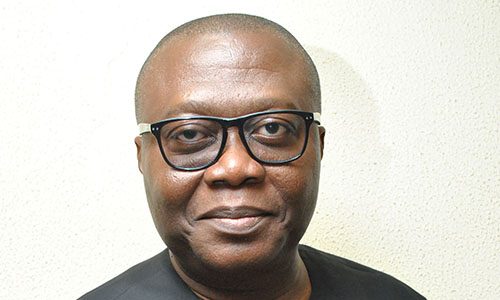
Media representatives on the panel, including Ehi Braimah and Ijeoma O. Popoola, turned the spotlight inward. They argued that child-related reporting in Nigeria tends to be episodic, surging during crises or commemorative days, then fading from national conversation. They pushed for dedicated child rights desks in newsrooms, long-form investigations into school safety, deeper monitoring of state budgets, and improved data literacy among journalists to prevent misinterpretation of statistics.
Their position was that without sustained media pressure, many child-focused policies remain dormant and public awareness low.
A question from the audience about disparities between states triggered one of the session’s most sensitive exchanges. UNICEF officials explained that some states operate at the level of low-income countries in crisis, while others are approaching middle-income benchmarks. This opened a broader discussion about governance inconsistencies, cultural barriers affecting girls’ education, unequal investment in primary health care and the political hesitation around naming poorly performing states. Although no state was mentioned directly, the implication was unmistakable: Nigeria cannot achieve meaningful progress for children while allowing its weakest systems to define national outcomes.
The panel also addressed the growing role of young people in advocacy. The earlier performances and youth contributions raised concerns about how children’s voices are often used symbolically rather than substantively. Aproko Doctor stressed that youth advocates must be integrated into ongoing policy dialogue, especially on issues like digital safety, mental health and school security, instead of being limited to ceremonial appearances.
Contributions from the National Orientation Agency, represented by Henshaw Ogubuike, added another dimension. He emphasised that while orientation campaigns alone cannot resolve structural problems, sustained community level engagement is essential for improving uptake of immunisation, girls’ education and reporting of abuse. Ogbuike’s comments reinforced a message that ran through the session: policy is ineffective without community acceptance and behaviour change.
Taken together, the panel’s discussions formed an unwritten blueprint for understanding Nigeria’s child-rights landscape. The issues laid bare were multidimensional: deep state-level inequality, inconsistent implementation of policies, gaps in reliable data, the media’s inconsistent commitment, and the need for stronger integration of youth voices. The exchanges did not resolve these challenges, but they clarified them more honestly than any prepared speech earlier in the programme.
