


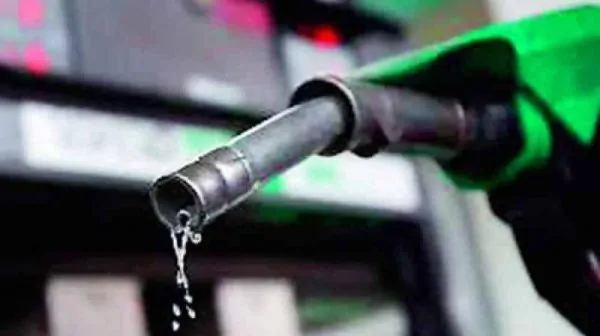

The Nigerian National Petroleum Company Limited have effected an upward adjustment in the pump price of the Premium Motor Spirit, also known as petrol, to N945 per litre in the Federal Capital Territory on Monday.
It also adjusted its petrol pump price to ₦915 per litre at several of its Lagos retail outlets, marking a fresh upward shift in the downstream retail market.
The current price marks a fresh spike of N45 and N35 in Lagos and Abuja, respectively, up from the previous prices of N870 and N910 per litre.
The price adjustments come just days after the Dangote Petroleum Refinery increased its ex-depot price of petrol from N825 to N880 per litre, sparking an industry-wide response

It was observed that the price of the product increased to N915 at some NNPC filling stations in Lagos on Monday.
At the NNPC retail outlet at Fin Niger, Badagry Expressway, the price of the product increased to N915.
Similarly, at the NNPC filling station at Igando, the price of the product was sold at N915 a litre.
At the NNPC retail outlet in the Federal Housing area of Kubwa, Abuja, the new price of N945 per litre was boldly displayed, with similar adjustments noted at the state-owned mega station along Obasanjo Way.
In Lagos, the ripple effect was also visible across private retail outlets.
MRS filling stations, a strategic partner of the Dangote refinery, raised pump prices to N925 per litre in Lagos, up from N875.
Also Read:
- Okun Alfa: Caught Between a Raging Ocean and Lagos’s Urban Ambition
- EFCC detains ex-Skye Bank Chairman over alleged N36.5b, $30m fraud
- Akanni Iromini at 70!, by Abiodun Komolafe
- ATM card issuance, replacement to cost N1,500 – CBN
- Court dismisses FHT Mega Express suit against Parallex Bank
TotalEnergies followed suit with a new price of N910, while other marketers like Oluwafemi Arowolo Petroleum in Iba pushed rates to N920 per litre.
According to available information, major supply hubs in Lagos, including Wosbab, Pinnacle, and NIPCO, have now set PMS ex-depot prices between N920 and N925 per litre as of June 23, citing rising upstream costs and international crude prices.
