



The Ministry of Budget and National Planning says it has designed a fiscal stimulus strategy that will help the country to come out of its economic recession.
This is contained in a document entitled: “Turning a Crisis into an Opportunity: the Economy and the 2017 Budget,” obtained by the press on Tuesday in Abuja.
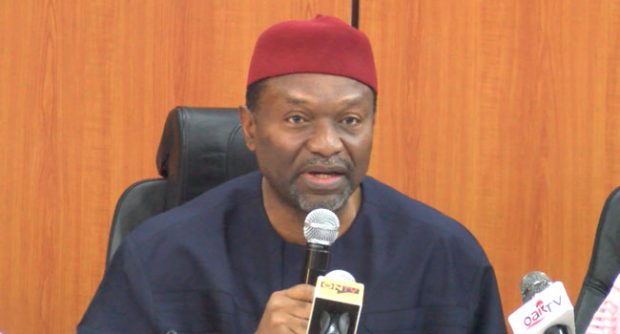
The document was presented by the Minister of Budget, Senator Udoma Udo Udoma, at the recent Ministerial Retreat to harvest ideas to come out of the economic crisis.
Udoma said the Economic Management Team had been working on a plan to generate an immediate large injection of funds into the economy.
He said the team had plans to generate and inject large amount of funds, principally in foreign currency, estimated at $10 billion to $15 billion into the economy.
The minister said funds would be generated through Asset Sales, Advance Payment for Licence renewals, infrastructure concessioning, use of recovered funds etc, to bridge the funding gap.
Udoma said: “To achieve this speedily, we will need to fast-track procedures through Presidential directives and legislation; a bill is almost ready for submission to National Assembly.”
The minister, however, emphasised the need for the country to spend its way out of recession through injection of large amount of money into the economy.
Udoma noted: “The 2016 Budget performance is reflective of the low revenue out-turns attributable to the global and domestic developments earlier highlighted.
“Oil revenues fell significantly in the second quarter compared to the first quarter as a result of increased oil pipeline vandalism and production shut-ins.
“Non-oil revenues also declined due to the acute shortage of foreign exchange.”
The minister said the failure to diversify the economy and implement the national goals due to lack of discipline in the past had made the country witness negative growth.
He said the government had put measures in place to diversify the economy.
He said some of the measures included “tackling challenges inhibiting private sector participation in the upstream petroleum sector and building on the petroleum products deregulation ($7.9 billion or about 30 per cent of Forex demand in 2015).
It will also boost agricultural production for food sufficiency, as food imports have the third highest demand for Forex ($3.4 billion in 2015 or about 8 per cent of total demand).
The minister said another measure was “growing non-oil exports in the light of competitive and comparative advantage created by devaluation following the introduction of a market reflective exchange rate”.
In addition, he said the government was working hard to resolve the militant disruptions in the Niger Delta.
Udoma said the major factor responsible for the recession was the over dependence of the economy on revenues from a single commodity, petroleum.
According to him, revenue source is not sustainable since the country doesn’t control the price of crude oil.
He said unsustainable structure was characterised by some indices, including “oil sector less than 9 per cent of Gross Domestic Product but about 80 per cent of government revenue and 95 per cent of Forex.
Other indices are “non-oil sector about 90 per cent of GDP (of which 52 per cent was indirectly dependent on Oil) but less than 20 per cent of government revenue.
According to him, another index is declining capital expenditure with rising recurrent expenditure (2015 about 10 per cent capital) and import dependent consumption growth model with stagnant growth in Investment to GDP.
Other indices, the minister said, included collapse of crude oil prices from over 110 dollars per barrel in 2014 to less than $30 per barrel in the first quarter of 2016 (recently rising but still less than $50 per barrel).
The collapse in the crude price has also led to reduced confidence, leading to declining Equity and Foreign Investment Capital Inflows from $9.7 billion by end of second quarter 2014, to $0.64 billion at the end of second quarter of 2016.
Nigeria’s economy formally entered recession in the third quarter of the year when its Gross Domestic Product in real terms declined by -2.06 per cent in second quarter, according to National Bureau of Statistics.
The figure was lower by 1.70 per cent points from the negative growth rate of 0.36 per cent recorded in the preceding quarter.
By economic principles, an economy enters recession when the contractions are observed at least two quarters.
