


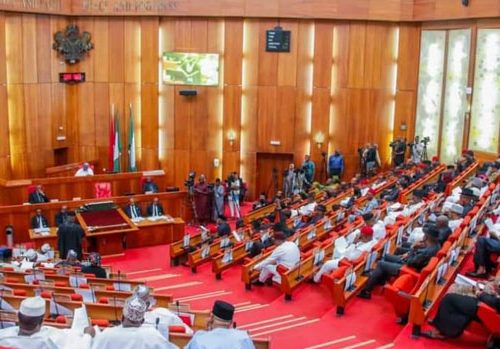

The Senate on Thursday embarked on legislative move of including Nigeria in the $147billion global bitumen market with passage for second reading, a bill seeking for the establishment of Bitumen Development Commission.
Nigeria, as stated in the bill sponsored by Senator Jimoh Ibrahim, has a quantum of 5.9 trillion barrels (938billion m³) of bitumen and heavy oil resources, second to Venezuela.
He specifically informed the Senate that more than 80% of the resources are found in Canada, United States of America, Venezuela and Nigeria.
But he lamented that while other countries blessed with the natural resource are exploiting it through required legislations or legal frameworks, Nigeria has no legal framework for such exploration with attendant untapped opportunities and huge market loss.


Therefore, according to him, “the objectives of the Bill include: the need to develop a legal framework for the regulation of the bitumen development in Nigeria; to prevent unconventional sources from taking advantage of research-enhanced applications over other competitors; and to lead innovation and resource-based strategy in the development of bitumen in Nigeria.
“The Bill will also ensure effective utilisation of over 38 billion reserve of bitumen in Nigeria; and to promote economic diversification policy of the Federal Government”.
He added that the Bill among other reasons, seeks to restrict the activities of the commission to its regulatory and coordinating functions, specifically as it relates to the development of bitumen in Nigeria.
Ondo State alone, according to him, has the highest deposit in Africa with an estimated value of $42billion which are aside from deposits in Ogun, Edo, Lagos and Akwa-Ibom states.
“The proposed Bitumen Development Commission, when established, would fast track the development of Bitumen in Nigeria, make her a key player in the $147billion global market and create instant 12,000 jobs for Nigerians.
“It would also help government at various levels to put in place asphalted roads in various communities.
“Out of the 200,000 kilometres of roads in Nigeria, only 20,000 are asphalted even with imported bitumen which is not good and being addressed with the proposed commission,” he said.
Many of the Senators who contributed to the debate on the bill, concurred with Jimoh Ibrahim’s submissions, making the Senate to put it to voice votes by its President, Godswill Akpabio, passed it for second reading.
Akpabio who commended Senator Jimoh Ibrahim for sponsorship of the development-driven bill, mandated the Senate Committee on Solid Minerals to make further legislative inputs on it and report back in a month’s time.
